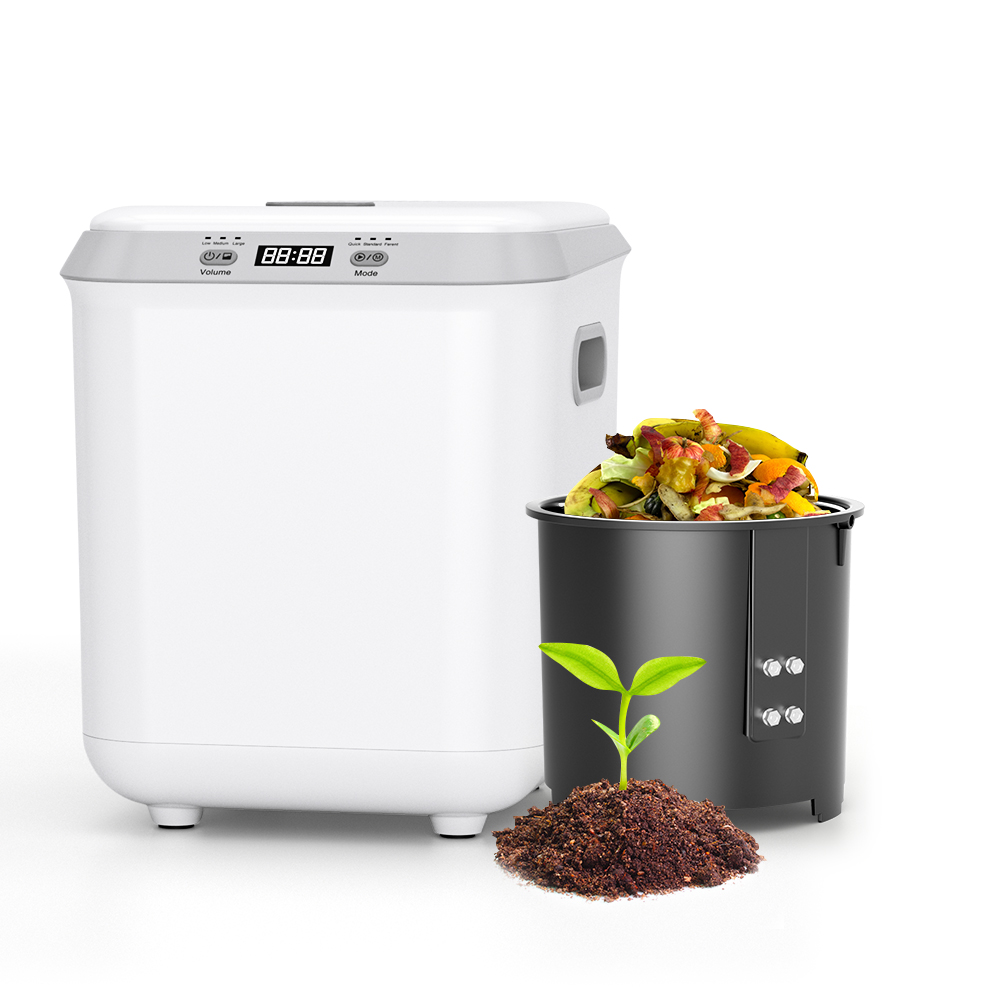
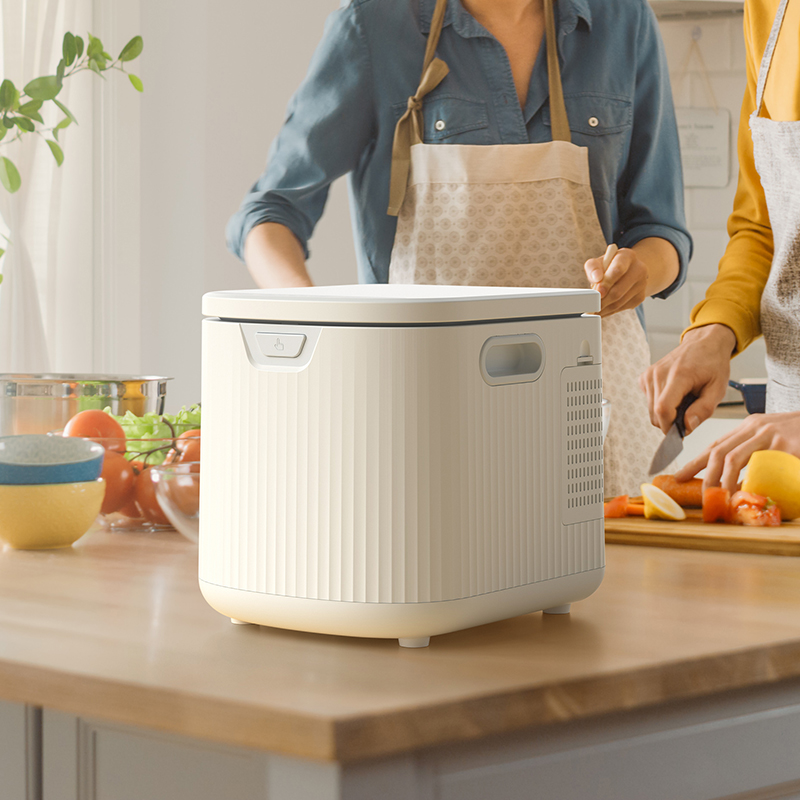
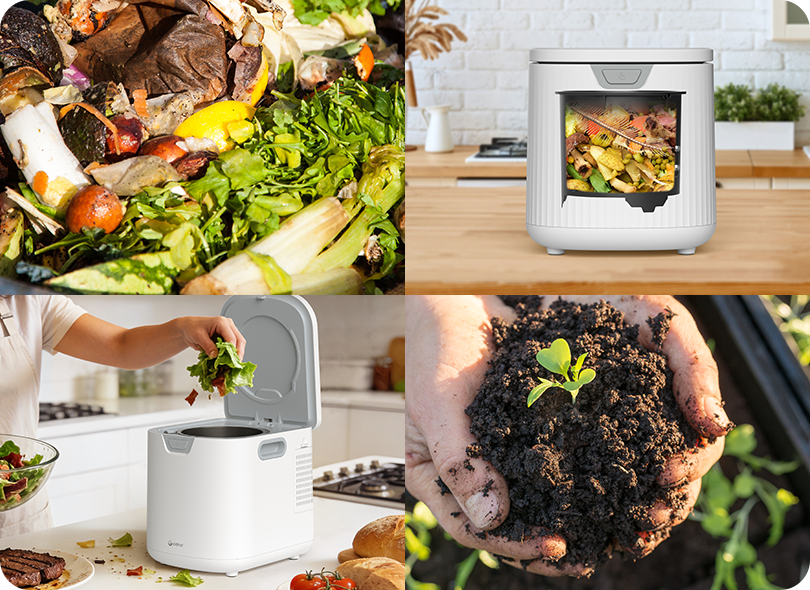
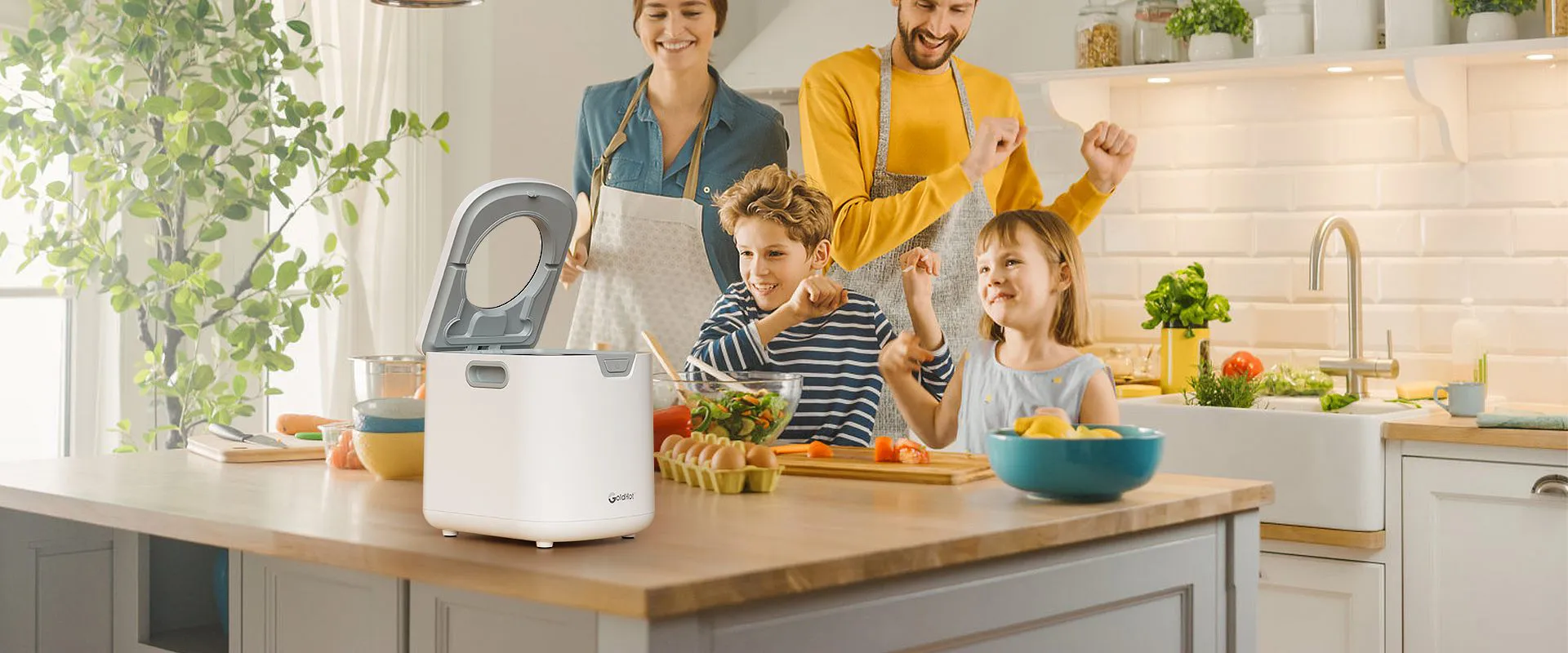
Kitchen waste is one of the biggest sources of household garbage — vegetable peels, leftover food, fruit skins, coffee grounds, and more. These scraps not only fill up trash bins quickly but also create odors and require frequent disposal. A food composter offers an efficient, eco-friendly way to transform your everyday kitchen waste into something useful.
Here is how a food composter helps reduce waste, lower your environmental impact, and make your home cleaner.
1.Turns Food Waste Into Dry, Stable, Odor-Free Material
Modern electric composters use drying, grinding, and heat decomposition to break down food scraps. This process can reduce the volume of waste by up to 90%, transforming leftovers into lightweight, dry, soil-like material.
This means:
Less waste is sent to landfills
No more leaking kitchen trash bags
No rotten smell in your home
Instead of throwing away messy leftovers, you get clean and compact “eco-chips” that are easy to store or dispose of
2.Minimizes the Frequency of Taking Out the Trash
For many families, food waste makes up 50% or more of daily garbage. Because it decomposes quickly, it also produces odor and attracts insects.
With a food composter:
You can run a cycle every night
The final output takes up a tiny amount of space
You only need to take out the trash every few days, not daily
This is especially helpful for apartment living, busy families, and people with limited kitchen space.
3.Prevents Methane Emissions From Landfills
When food waste goes to landfills, it breaks down anaerobically (without oxygen), producing methane — one of the most harmful greenhouse gases.
A food composter breaks down food aerobically (with heat and oxygen), preventing methane production.
Environmental benefits include:
Reduced carbon footprint
Lower contribution to global warming
More sustainable waste management at home
It’s a small step that makes a big impact when multiplied by millions of households.
4.Eliminates Smell and Bacteria From Raw Food Waste
Because the composter dries and heats the waste, it destroys:
Bacteria
Mold
Food-borne pathogens
And since the waste becomes dry and stable, there’s:
No sour or rotten odor
No fruit flies
No liquid leakage
No mess in your trash bin
Your kitchen stays clean, fresh, and hygienic.
5.Produces Compost Material That Can Be Reused
Depending on the type of machine, the output can be used as:
Soil amendment
Garden fertilizer
Plant nutrient booster
Even if you don’t have a garden, the leftover powder is:
Harmless
Non-toxic
Minimal in volume
Some people mix it into potting soil for indoor plants.
6.Handles a Wide Variety of Food Scraps
A good composter can process:
Vegetable scraps
Meat and fish bones (small/soft)
Fruit peels
Coffee grounds and tea leaves
Pasta, rice, bread
This means nearly all kitchen waste can be processed in one machine — no sorting needed.
7.Saves Time and Makes Daily Life More Convenient
A composter removes one major daily chore: dealing with wet, smelly food waste.
You gain:
A cleaner home
Faster kitchen cleanup
Less stress about garbage
More convenient lifestyle
For families, busy professionals, and eco-conscious users, it becomes an essential appliance.
Conclusion: A Simple Home Solution With Big Impact
A food composter is more than a kitchen gadget — it’s a practical tool that transforms how your household handles waste. By reducing volume, eliminating odor, preventing landfill pollution, and converting scraps into usable material, it dramatically improves both your home environment and your environmental footprint.
If you’re looking for a cleaner, greener, and easier way to handle food waste, a kitchen composting machine is one of the smartest investments you can make.